понедельник, 26 марта 2018 г.

Pregnant Cat Deeley conceals her baby bump in loose-fitting blouse at family festival in LA

sexxxykitten2409 45yo Corpus Christi, Texas, United States

Pregnant Cat Deeley conceals her baby bump in loose-fitting blouse at family festival in LA


BUY quality bulk Yahoo Twitter Hotmail Google Voice Facebook Accounts
GraMatter 23yo Looking for Men, Couples (2 men) or Groups Las Vegas, Nevada, United States

The TV host, 41, kept her growing baby bump out of the spotlight beneath a baggy T-shirt as she attended Target and and Hunter's Ultimate Family Festival in Los Angeles on Sunday afternoon. more on Geo altCom
bayouangelk 45yo The Woodlands, Texas, United States

cougar4753 47yo Florence, South Carolina, United States

Настроенческое....


#ДОНЕЦКАЯ_РЕСПУБЛИКА

Настроенческое....


Пост навеян непростым положением особенно командиров четырнадцатого  года, настоящих батей-комбатов, за которыми пошли люди, и которых  выстроенная система сегодня исторгает, как пережиток прошлого....Это про  тех, кто не изменил себе.

Осмелюсь сделать допущение, что мир  прагматиков справедливее мира идеалистов, и прежде всего потому, что  прагматики в свой мир идеалистов не пускают, и живут по справедливому  для них закону "от каждого по способности - каждому по труду". Не  способен ты трудиться в силу инвалидности, или по иным причинам? Получи  ровно столько, чтобы считалось, что тебе в помощи не отказано. Идеалисты  же не ставят барьеров прагматикам, которые могут прагматично  притворяться идеалистами, и пускают их в свою среду, в которой  прагматики чувствуют себя хозяевами положения, и в итоге превращают эту  среду в среду несправедливости, потому что вот тут им карта как раз и  прет - как не наказать лохов? Вся несправедливость мира идеалистов,  когда им удается в определенных условиях создать свой мир из  разбросанных капелек ртути, каковыми они являются в мире глобальном,  обусловливается прагматизмом, который в материалистическом мире более  способен к выживанию.

Всем известна фраза про тех, кто делает  революцию, и кто потом приходит им на замену. Я наблюдаю глубокую драму  людей, которые рванули в едином порыве, и собрали из себя мир, который  продержался самую малость. Вместе с ними в поток попали и те, кто светил  отраженным светом, или носил в себе совсем шкурные, но скрытые мотивы.  Законы прагматичного мира, которые заставляют сопрягаться миры  идеалистов и прагматиков, побеждают в силу своей структурированности и  большей приспособленности иррациональные стихию и порыв, постепенно  превращая отдельные фрагменты вчерашнего стихийного целого в догорающие в  полете листья, вырвавшиеся из костра. Вчерашний комбат, вчерашний боец,  не вписавшиеся в новую реальность, где правят бал другие порядки, не  понимая, что произошло, хватаются за сердце, хватаются за бутылку,  хватаются за телефон и вопиют: что за х..ня? А ничего - просто все  снова, как и всегда в истории. Помните "Гадюку" Алексея Толстого? 

 Мы много говорим об идее, которой нет, но мы не говорим о том, что все  меньше и потенциальных носителей идеи. Меркантильное общество любит  поговорить о высоком - это скрашивает жизнь, - но не очень любит идеями  руководствоваться. Если носитель идеи не готов за нее на смерть - это  либо провокатор, либо пи...добол. В начале мая 2014 года ко мне в штаб  пришел один из "идеологов", горячо и кичливо распространявшийся о  каких-то, плохо понимаемых даже ним самим смыслах. Он потом занял  достойное место в иерархии идеологов, но вскоре его раскусили даже  "прагматики", и задвинули не "по классовому признаку", а ввиду его  никчемности. Я его спросил тогда, - а готов ли он на баррикады за свои  речи и формулы? Он ответил, что его задача генерировать смыслы, а на  баррикады есть кому. И последующая "практика" показала, что из публичных  идейных тех, кто готов на что-то большее, чем мелькать в экране  телевизора, с гулькин хрен. Вот потому и нет идеи, потому что нет тех,  кто, как по Маяковскому, готов - "За нее и на смерть пулею чесать".  Потому и я называю себя человеком безыдейным, потому что сам до  генерации не дорос, за то малое, что провозгласил, вышел на баррикады, а  среди тех, кто претендует на генерацию, не увидел никого, кто готов был  бы шкурой своей рискнуть по-настоящему. Поэтому идеалисты есть, а идеи,  которая бы их объединила, нет. 

А мир прагматиков справедливее  мира идеалистов. Потому что идеалисты гореть умеют, а мир вокруг себя  обустраивать не умеют, и остаются на баррикадах, предоставляя кому-то  тылы и домашнее хозяйство. А когда оборачиваются - там уже все не так,  как они себе нафантазировали - и из этого вытекает самая главная  несправедливость.
Но также несправедливо было бы с и моей стороны  закончить на такой ноте, лишив идеалистов и романтиков собственного мира  - их мир есть, но он не от мира сего. Он в тех книжках, которые нужно в  детстве читать...Я пишу это все с глухой болью от того, что происходит  сейчас на наших глазах. В очередной раз попытка притянуть другой мир из  горних высей и прикрепить его к грешной земле натолкнулась на все те же  болячки и проблемы - скрепы оказались ненадежными....Ничего не потеряно и  не напрасно, но дрова в костре горят, освещая и обогревая, не для того,  чтобы уцелеть. Слышишь, старый комбат? Бросай стакан, бери шинель, и  пошли....

подробнее:
polk donbassa
colonelcassad

обменки BITCOIN-VISA-WebMoney
alfacashier wmglobus.com

Fixing Appalachia Is The First Step To Fixing America

pimpinpeach77 34yo Atlanta, Georgia, United States

Fixing Appalachia Is The First Step To Fixing America


BUY quality bulk Yahoo Twitter Hotmail Google Voice Facebook Accounts
loversplay 46yo Somewhere, Utah, United States

Nicholas Kamm / AFP / Getty Images

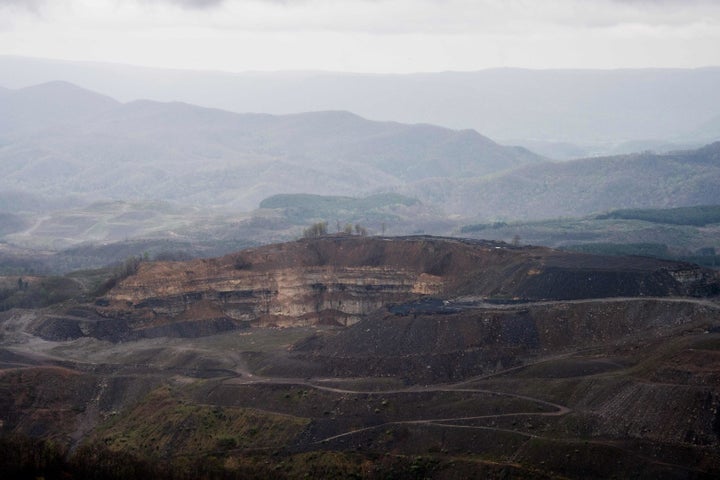
When the majority of Appalachians turned out to vote for Donald Trump in 2016, the region was held up as a symbol of our broken politics. The New York Times labeled central Appalachia "Trump Country," and its inhabitants, a New York magazine columnist wrote, “must live with — and deserve to suffer under — the havoc Trump wreaks."

This isn’t the first time the mostly forgotten people of Appalachia have been conveniently rediscovered during a period of national crisis and change. When white America felt threatened by immigration and black equality at the beginning of the 20th century, Appalachia became the home of "our contemporary ancestors." Decades later, amid Cold War righteousness about the American capitalist system, Appalachia became an "island of underdevelopment" where our winning universal formula was inexplicably failing.

And now pundits on both the left and the right have used Appalachia to explain the Trump phenomenon.

"The people of Trump Country, like so much of white America, long for a past that never was, and a future that cannot be. A past cleansed of conflict, where a big, paternalistic company gave them nice things if they worked hard,” wrote Kevin Baker in the New Republic.

Conservatives, on the other hand, saw Trump's election as evidence that liberal policies have created "white ghettos" of dependency. Their guidebook for the Trump revolution in Appalachia is Hillbilly Elegy, a bestseller written by Ohio's J.D. Vance that promotes most of the same stereotypes of mountain people found in American literature since before the turn of the 20th century, and concludes that the only path out of poverty is individual initiative and hard work.

These arguments from the left and right ignore the real sources of persistent poverty and human suffering in the mountains. The problems that plague central Appalachia are well known: the decline of coal mining jobs due largely to changing markets; the absence of employment alternatives; the rise of opiate addiction; higher rates of depression, heart disease, and cancer; growing dependence upon Medicaid and SSI; and insufficient tax revenues for education and other local services.

Rampant, unregulated free-market capitalism has ravaged the land and people of the mountains since the turn of the 20th century, creating an internal economic colony that provided natural resources for the modernization of the rest of country but left the working-class residents of Appalachia dependent and poor. Efforts to reduce regional poverty over the last five decades, including those of the present, have relied primarily upon the same market expanding strategies that fueled these inequalities in the first place. They provide a semblance of growth and opportunities for a few, especially those well connected to outside sources of capital, but they do not fundamentally alter the economic, political, and institutional structures that have plagued the region for more than a century.

The tendency to view Appalachia as part of some "other America" has long limited our ability to recognize the inequalities within the region and, by extension, within the American system itself. Designers of the War on Poverty in the 1960s fell back upon cultural deficiency theories and free market strategies to bring Appalachia into the emerging consumer mainstream, never addressing the region's long status as an internal resource colony for the rest of the country.

That meant ignoring structural inequalities such as absentee land ownership, single-industry dependence, inadequate taxation, undemocratic governance, and racism. Instead, most anti-poverty efforts worked to increase services and change individual behavior among the poor, rather than struggle for community reorganization and economic equity. Development efforts focused on expanding infrastructure, access to markets, and job creation through investment by outside industries. Regional elites maintained control of the anti-poverty programs, and resources for development tended to flow toward middle-class growth centers rather than poorer rural communities.

While the expansion of government transfer payments in the final decades of the century improved quality of life for the poorest residents — poverty was cut in half, and new highways gave access to jobs and cheap consumer goods — income, land distribution, and political power remained strikingly unequal.

The failure of these libertarian and neoliberal strategies to bring hope and equality to mountain communities fuels much of the antipathy toward government found within the region today. The "Friends of Coal" campaign, financed heavily by the coal industry, helped reinforce years of accusations by mountain elites that the problems of the region were not the result of exploitation or local greed and corruption, but the arrogance of "outsiders," especially federal bureaucrats.

Encouraged by conservative media and religious leaders who stirred racial and nationalist resentments, and by the rowdy blustering against the establishment by candidate Donald Trump, white working-class voters in the mountains threw their support to Trump. Far from merely voting against their own interests, these voters may have been sending a message to both the Democrat and Republican leadership that the policies of the past have failed in Appalachia just as they have failed to reduce inequality nationally. And they may have been sending one additional message: that they are tired of the arrogance and condescension with which conservative and liberal elites have treated their rural working-class culture as well.

These economic and emotional motivations do not excuse the racism expressed by many white working-class voters in Appalachia toward the Obama administration, nor do they fully explain their willingness to vote for a nationalist and white supremacist candidate. But they do shed light upon the depth of despair and the lack of hope that pervades the region. Racism is systemic in white America, and it cuts across class and geographic boundaries, but it is often difficult for working-class whites in Appalachia to recognize the benefits of "white privilege" because of their marginalized place in the American economic and social system. Facing persistent unemployment, powerlessness, and a bleak future — and openly demeaned by elites as "hillbillies" — working-class whites in Appalachia easily succumbed to baser emotions of anger, resentment, and racism.

This may be the central issue of the Trump era: whether we will continue to blame the people of the region for their own condition, or whether we will acknowledge the need for substantive structural reform nationally and within Appalachia. Commentators who championed Hillbilly Elegy missed the opportunity to reveal the underlying systemic failures that drove working-class whites in Appalachia and elsewhere to vote for Donald Trump. Racism, economic inequality, elitism, greed, and a self-serving political oligarchy fueled deep sentiments of distrust and resentment. If Appalachian residents are angry with their condition, we should take their complaints seriously.

Appalachia's problems are neither unique nor a product of some strange and peculiar culture — in fact, they’re deeply interconnected with the political and economic life of the nation as a whole. The lessons of its past speak to fundamental inequalities within American society today that must be acknowledged if we are to build a different future. To repeat the same policies and received assumptions will only produce the same unequal outcomes.

Appalachia's troubled past shows the need for deep and fundamental policy change — and not just in Appalachia. Struggling regions of the country need land reform, including the reduction of absentee land ownership and the promotion of alternative land use, and they need to broaden economic participation and ownership. Primary institutions need to be rebuilt, especially in health care and education. And in public life, leaders need to exhibit the kind of ethics and values that hold a community together: collective responsibility, diversity, and respect for each other and for the natural world.

Such revolutionary change may appear to be overwhelming, but examples of these changes already exist within the region and across the globe. What is needed is political will and leadership — to transform our assumptions about Appalachia and our American system as a whole.

The ground is still uneven in Trump-era Appalachia, and in the rest of the nation the American promise is still unfulfilled for millions of working-class people. Confronting the challenges facing Appalachia will force us to reconsider our core values and institutions as Americans. In that regard we are all Appalachians.

This article was adapted from the essay "Appalachia in the Age of Trump."

Ronald D. Eller is the author of Uneven Ground: Appalachia since 1945. He is a distinguished professor of history, emeritus at the University of Kentucky.

more on Geo altCom
Dragons_jez 38yo Looking for Men, Women, Couples (man and woman) or Couples (2 men) Las Vegas, Nevada, United States

Likable39 44yo Park City, Utah, United States

Astronomer that inspired the 1997 movie Contact claims Earth will discover alien life by year 2100

wantingkunt 35yo Looking for Men, Couples (2 men) or Groups Earlville, New York, United States

Astronomer that inspired the 1997 movie Contact claims Earth will discover alien life by year 2100


BUY quality bulk Yahoo Twitter Hotmail Google Voice Facebook Accounts
JaneSays 41yo Fairview, Oregon, United States

Famous aerospace scientist Jill Tarter - who was played by Jodi Foster in the 1997 movie Contact - claims that Earth will discover alien life by the end of the century in 2100. more on Geo altCom
nuclearsummer 35yo Looking for Men Evanston, Illinois, United States

mjc43 26yo Looking for Men New York, New York, United States

Apple Just Proposed 13 New Emojis With Disabilities

linda_cums1 38yo Asheboro, North Carolina, United States

Apple Just Proposed 13 New Emojis With Disabilities


BUY quality bulk Yahoo Twitter Hotmail Google Voice Facebook Accounts
TheSexyPilot 21yo Everett, Washington, United States

Emojis with wheelchairs, white canes, and various other disabilities may soon be coming to your iPhone: Apple has proposed a suite of 13 new emojis "to better represent individuals with disabilities."

"Currently, emoji provide a wide range of options, but may not represent the experiences of those with disabilities," Apple wrote in its proposal to the Unicode Consortium, which governs the introduction of new emojis. "Diversifying the options available helps fill a significant gap and provides a more inclusive experience for all."

In its proposal, Apple also noted that the emoji were developed with input from American Council of the Blind, the Cerebral Palsy Foundation, and the National Association of the Deaf, and emphasized, "this is not meant to be a comprehensive list of all possible depictions of disabilities, but to provide an initial starting point for greater representation for diversity within the emoji universe."

Anyone can propose new emojis — last year, a 15-year-old proposed a headscarf emoji. Each proposal wends its way through layers of committees before making it to your phone, and not all proposals are approved. Apple's has been accepted by the Unicode Emoji Subcommittee and will now move on to the next step, discussion and review by the Unicode Technical Committee. The UTC's next meeting is slated for April 3–5.

Here are Apple's 13 proposed emojis:

Ear with hearing aid:

Ear with hearing aid:

Apple

The

Prosthetic arm:

Prosthetic arm:

Apple


Prosthetic leg:

Prosthetic leg:

Apple

Guide dog with harness:

Guide dog with harness:

Apple

Guide dog with leash and vest:

Guide dog with leash and vest:

Apple


more on Geo altCom
jazy497 45yo Looking for Men or Couples (man and woman) Taunton, Massachusetts, United States

LOSFREAKS214 18yo Dallas, Texas, United States

вторник, 27 февраля 2018 г.

Celebrate Pokemon Day with a new Alexa skill

jhaye156 22yo Everett, Washington, United States

Celebrate Pokemon Day with a new Alexa skill


BUY quality bulk Yahoo Twitter Hotmail Google Voice Facebook Accounts
rapesok 24yo Looking for Men, Women, Couples (man and woman), Couples (2 men), Groups or TS/TV/TG Columbus, Ohio, United States

TwitterFacebook

Pokémon Day, the holiday that celebrates all things Pokémon, arrives on Feb. 27. 

In honor of your favorite collectible friends and their special day, Pokémon Company International is releasing a Pikachu-themed app for Amazon Alexa and Google Home, and three new Snapchat lenses featuring Pokemon. 

The holiday commemorates Feb. 27, 1996, the day the first Pokémon games, Pokémon Red and Pokémon Green, launched in Japan. 

On this date every year since, Pokemon Company International rewards fans with promotions and merchandise. In 2016, the two original games were re-released for Nintendo's 3DSLast year's holiday featured a limited-time update to Niantic's Pokémon Go featuring Pikachu in a festive party hat. Fans could also purchase a Nintendo 3DS styled after the yellow character.   Read more...

More about Pokemon, Pokemon Go, Amazon Alexa, Google Home, and Tech more on Geo altCom
TwitterFacebook

Pokemon Day, the holiday that celebrates all things Pokemon, arrives on Feb. 27. 

In honor of your favorite collectible friends and their special day, Pokemon Company International is releasing a Pikachu-themed app for Amazon Alexa and Google Home, and three new Snapchat lenses featuring Pokemon. 

The holiday commemorates Feb. 27, 1996, the day the first Pokemon games, Pokemon Red and Pokemon Green, launched in Japan. 

On this date every year since, Pokemon Company International rewards fans with promotions and merchandise. In 2016, the two original games were re-released for Nintendo's 3DSLast year's holiday featured a limited-time update to Niantic's Pokemon Go featuring Pikachu in a festive party hat. Fans could also purchase a Nintendo 3DS styled after the yellow character.   Read more...

More about Pokemon, Pokemon Go, Amazon Alexa, Google Home, and Tech mstamika 37yo Looking for Men, Women or TS/TV/TG Sugar Land, Texas, United States

5fdpgal 26yo Malvern, Arkansas, United States