

Fixing Appalachia Is The First Step To Fixing America
BUY quality bulk Yahoo Twitter Hotmail Google Voice Facebook Accounts
loversplay 46yo Somewhere, Utah, United States


Nicholas Kamm / AFP / Getty Images
When the majority of Appalachians turned out to vote for Donald Trump in 2016, the region was held up as a symbol of our broken politics. The New York Times labeled central Appalachia "Trump Country," and its inhabitants, a New York magazine columnist wrote, “must live with — and deserve to suffer under — the havoc Trump wreaks."
This isn’t the first time the mostly forgotten people of Appalachia have been conveniently rediscovered during a period of national crisis and change. When white America felt threatened by immigration and black equality at the beginning of the 20th century, Appalachia became the home of "our contemporary ancestors." Decades later, amid Cold War righteousness about the American capitalist system, Appalachia became an "island of underdevelopment" where our winning universal formula was inexplicably failing.
And now pundits on both the left and the right have used Appalachia to explain the Trump phenomenon.
"The people of Trump Country, like so much of white America, long for a past that never was, and a future that cannot be. A past cleansed of conflict, where a big, paternalistic company gave them nice things if they worked hard,” wrote Kevin Baker in the New Republic.
Conservatives, on the other hand, saw Trump's election as evidence that liberal policies have created "white ghettos" of dependency. Their guidebook for the Trump revolution in Appalachia is Hillbilly Elegy, a bestseller written by Ohio's J.D. Vance that promotes most of the same stereotypes of mountain people found in American literature since before the turn of the 20th century, and concludes that the only path out of poverty is individual initiative and hard work.
These arguments from the left and right ignore the real sources of persistent poverty and human suffering in the mountains. The problems that plague central Appalachia are well known: the decline of coal mining jobs due largely to changing markets; the absence of employment alternatives; the rise of opiate addiction; higher rates of depression, heart disease, and cancer; growing dependence upon Medicaid and SSI; and insufficient tax revenues for education and other local services.
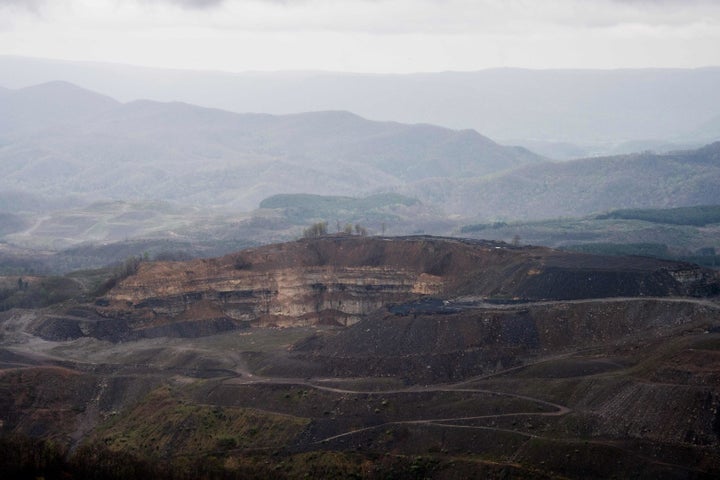
Rampant, unregulated free-market capitalism has ravaged the land and people of the mountains since the turn of the 20th century, creating an internal economic colony that provided natural resources for the modernization of the rest of country but left the working-class residents of Appalachia dependent and poor. Efforts to reduce regional poverty over the last five decades, including those of the present, have relied primarily upon the same market expanding strategies that fueled these inequalities in the first place. They provide a semblance of growth and opportunities for a few, especially those well connected to outside sources of capital, but they do not fundamentally alter the economic, political, and institutional structures that have plagued the region for more than a century.
The tendency to view Appalachia as part of some "other America" has long limited our ability to recognize the inequalities within the region and, by extension, within the American system itself. Designers of the War on Poverty in the 1960s fell back upon cultural deficiency theories and free market strategies to bring Appalachia into the emerging consumer mainstream, never addressing the region's long status as an internal resource colony for the rest of the country.
That meant ignoring structural inequalities such as absentee land ownership, single-industry dependence, inadequate taxation, undemocratic governance, and racism. Instead, most anti-poverty efforts worked to increase services and change individual behavior among the poor, rather than struggle for community reorganization and economic equity. Development efforts focused on expanding infrastructure, access to markets, and job creation through investment by outside industries. Regional elites maintained control of the anti-poverty programs, and resources for development tended to flow toward middle-class growth centers rather than poorer rural communities.
While the expansion of government transfer payments in the final decades of the century improved quality of life for the poorest residents — poverty was cut in half, and new highways gave access to jobs and cheap consumer goods — income, land distribution, and political power remained strikingly unequal.
The failure of these libertarian and neoliberal strategies to bring hope and equality to mountain communities fuels much of the antipathy toward government found within the region today. The "Friends of Coal" campaign, financed heavily by the coal industry, helped reinforce years of accusations by mountain elites that the problems of the region were not the result of exploitation or local greed and corruption, but the arrogance of "outsiders," especially federal bureaucrats.
Encouraged by conservative media and religious leaders who stirred racial and nationalist resentments, and by the rowdy blustering against the establishment by candidate Donald Trump, white working-class voters in the mountains threw their support to Trump. Far from merely voting against their own interests, these voters may have been sending a message to both the Democrat and Republican leadership that the policies of the past have failed in Appalachia just as they have failed to reduce inequality nationally. And they may have been sending one additional message: that they are tired of the arrogance and condescension with which conservative and liberal elites have treated their rural working-class culture as well.
These economic and emotional motivations do not excuse the racism expressed by many white working-class voters in Appalachia toward the Obama administration, nor do they fully explain their willingness to vote for a nationalist and white supremacist candidate. But they do shed light upon the depth of despair and the lack of hope that pervades the region. Racism is systemic in white America, and it cuts across class and geographic boundaries, but it is often difficult for working-class whites in Appalachia to recognize the benefits of "white privilege" because of their marginalized place in the American economic and social system. Facing persistent unemployment, powerlessness, and a bleak future — and openly demeaned by elites as "hillbillies" — working-class whites in Appalachia easily succumbed to baser emotions of anger, resentment, and racism.
This may be the central issue of the Trump era: whether we will continue to blame the people of the region for their own condition, or whether we will acknowledge the need for substantive structural reform nationally and within Appalachia. Commentators who championed Hillbilly Elegy missed the opportunity to reveal the underlying systemic failures that drove working-class whites in Appalachia and elsewhere to vote for Donald Trump. Racism, economic inequality, elitism, greed, and a self-serving political oligarchy fueled deep sentiments of distrust and resentment. If Appalachian residents are angry with their condition, we should take their complaints seriously.
Appalachia's problems are neither unique nor a product of some strange and peculiar culture — in fact, they’re deeply interconnected with the political and economic life of the nation as a whole. The lessons of its past speak to fundamental inequalities within American society today that must be acknowledged if we are to build a different future. To repeat the same policies and received assumptions will only produce the same unequal outcomes.
Appalachia's troubled past shows the need for deep and fundamental policy change — and not just in Appalachia. Struggling regions of the country need land reform, including the reduction of absentee land ownership and the promotion of alternative land use, and they need to broaden economic participation and ownership. Primary institutions need to be rebuilt, especially in health care and education. And in public life, leaders need to exhibit the kind of ethics and values that hold a community together: collective responsibility, diversity, and respect for each other and for the natural world.
Such revolutionary change may appear to be overwhelming, but examples of these changes already exist within the region and across the globe. What is needed is political will and leadership — to transform our assumptions about Appalachia and our American system as a whole.
The ground is still uneven in Trump-era Appalachia, and in the rest of the nation the American promise is still unfulfilled for millions of working-class people. Confronting the challenges facing Appalachia will force us to reconsider our core values and institutions as Americans. In that regard we are all Appalachians.
This article was adapted from the essay "Appalachia in the Age of Trump."
Ronald D. Eller is the author of Uneven Ground: Appalachia since 1945. He is a distinguished professor of history, emeritus at the University of Kentucky.
Dragons_jez 38yo Looking for Men, Women, Couples (man and woman) or Couples (2 men) Las Vegas, Nevada, United States


Likable39 44yo Park City, Utah, United States





 mstamika 37yo Looking for Men, Women or TS/TV/TG Sugar Land, Texas, United States


